coffee excursions: bear pond espresso

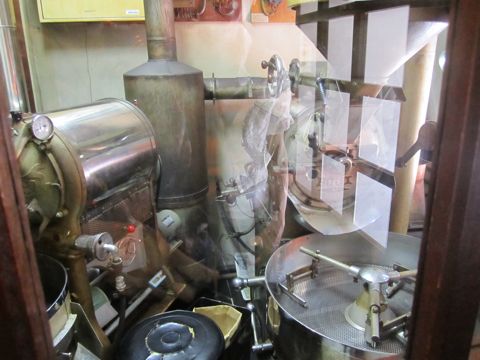
In an unassuming spot by Shimokitazawa station, you can find a rare thing: exceptional espresso.
Urged to go to Bear Pond Espresso by Dave S. at Ride.Studio.Cafe, and jonesying for some good espresso, I jumped on the Odakyu subway line to get a taste. The space is small but cozy, with worn wood counters and a stylishly stark interior. A white La Marzocco machine perches on the counter, behind which hang single serving French press pots. The menu is simple, but delicious.

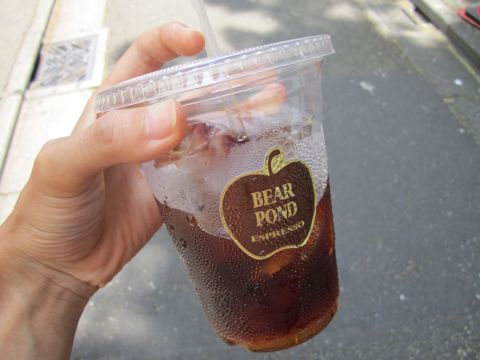
Photos can’t be taken inside, so you’ll have to content yourself with a shot of what remained of my cold brew as I walked back to the subway station. I had an espresso before that; a bright shot with echoes of Stumptown’s Hairbender, although Bear Pond roasts [and sells] their own.
A few bags of beans might just be delivered into the hands of some lucky friends in a few weeks. Until then, feel free to vicariously indulge…

of purity and mountain goats

My junior year of high school, I lucked out and scored a trip that entailed doing mostly nothing for three days. The trip was one of a dozen or so annual cultural outings required by the international school I attended, and what appealed to most of us was that the itinerary was appropriately stark. Our cultural exposure would be mostly limited to praying under a waterfall, a Japanese method of ascetic purification. The other two days, we would be sitting on a bus or occasionally looking at things. Considering the potential for rooftop smoking and hanging out, though, the waterfall thing didn’t sound so bad at all.
I only remember two things from that trip: the first was that the guys kept calling our room until we unhooked the phone around 3 a.m., and the other was that the water was so frigid that I couldn’t feel my feet as I waited for my turn to scream a prayer under a man-made waterfall in a white kimono-like shift that, when wet, made wet t-shirt contests seem like clothed events. I didn’t particularly feel any more pure after the fact, but perhaps I was more tarnished to begin with. Or, I suppose there is always the possibility that purity for the Japanese ascetic can only come in the form of mini-waterboarding.
Yet the experience remains one of my more culturally engrossing moments, despite my teenage oblivion to most life events back then. A particularly Japanese moment, I like to tell myself. Perhaps because it is one of the few instances in which some other culture didn’t mix and mingle with the Japanese one, an event which is difficult to describe to my American friends without insisting that no, I’m really not making this up.

null

The purity of that experience makes it more difficult to explain, but paradoxically easier to comprehend. Because it is when cultures are melded together when understanding them requires an adjusted sense of what is normal. The differences are minute, but also that much more glaring. And it was this necessary recomposition of the habitual on the bike that kept me from putting together my IF for over a week after I landed in Tokyo. That and the knowledge of anticipated conflict: the bike would inevitably feel so right underneath me, but with nowhere to go, it would only deepen my sense of loss.
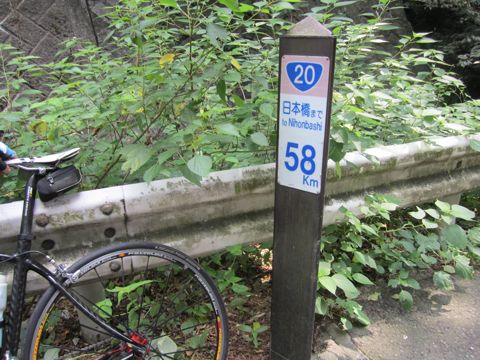
But sometimes even I can get [extremely] lucky, and a recent reader will offer to take me up a mountain, even if he stripped out the threads on his road cleats the night before. Which is why last Sunday, I got up at 5 a.m., earlier than I used to get up for my usual RSC rides, and headed out to meet Deej for a casual ride out to the Otarumi pass at Mt. Takao.

null

null

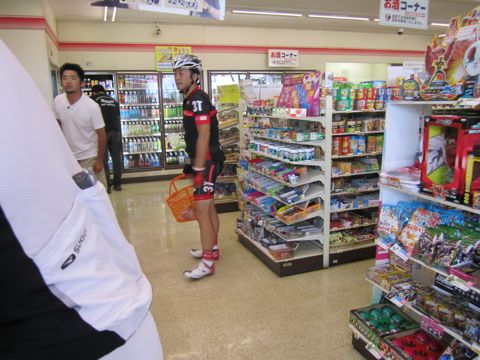
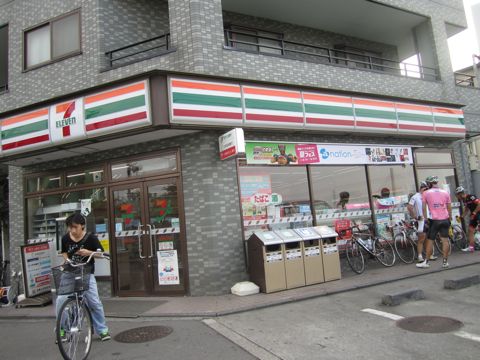
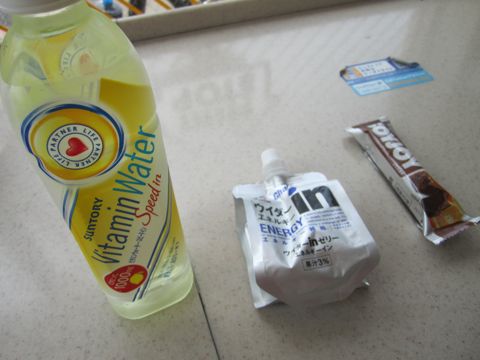
A flat ride until we hit the base of the mountain, our early start helped, but in two hours, the sun started to pound down, the heat inching towards 100F with the humidity. Riding along the Tama River, we slipped and weaved around runners and early morning cyclists, and dove into a Seven Eleven – like many others – to refill our bottles. Different from the coffee shops of Boston or the delis of NYC, but air conditioned bliss nonetheless.
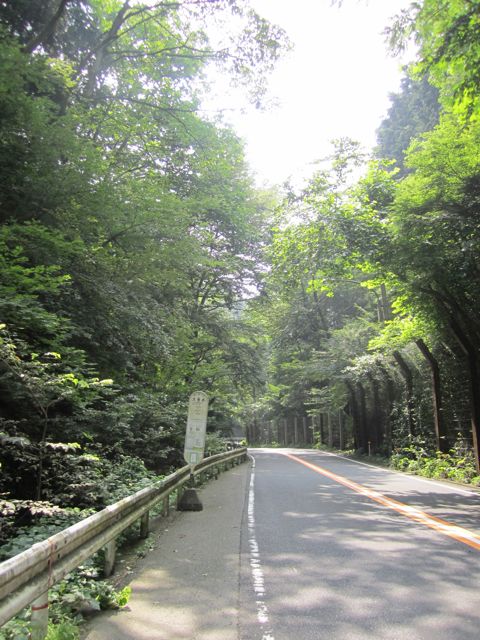
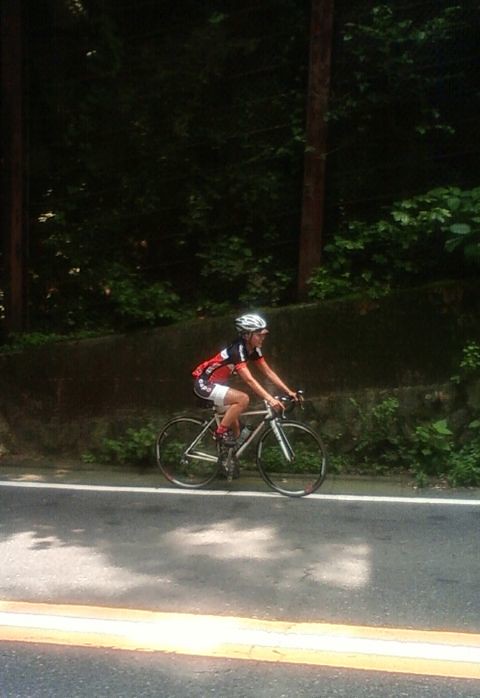
A few hours later, we were at Mt. Takao, climbing. steadily Deej kept it slow [he usually TTs up the climb with a bunch of other insanely strong people], spinning in front of me while I tried not to die. My skin was acting like a towel getting actively wrung out and the only thing I can remember thinking about was the heat. And just as I was wondering whether the liquid running down my chin was drool or sweat, Deej stood up and swam up the rest of the climb.

null

null

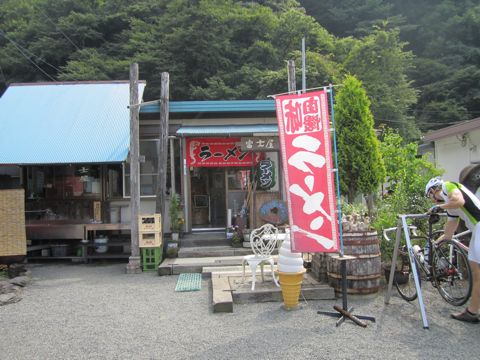
I suppose I expected it, but my jaw dropped [this time in amazement, not exhaustion]. I dragged myself up a few long minutes later, drenched. A bit farther up, and we were at a ramen shop [complete with bike racks] where we bought a couple bottlefuls of natural spring water. Apparently the same water that was used to make the best cup of brewed coffee in Japan. And as we looked out towards the mountains beyond, Deej told me about his usual rides: up and over three mountain passes and back. A colossal 9800 feet of climbing in less than 40 miles. All on mountains low enough that you can ride them all year around.

null

null

“We’re going to turn you into a mountain goat,” Deej said, before we made the slow trek home. A few hours later, an email offered a ride next Monday – up an additional pass or two – and there was no hestitation in the answer that I replied with. Because while the elevation will mostly likely kill me [or at least compromise my self-made promise to never put a foot down on a climb], there’s one thing I do know to be true. That no matter the outcome, there is a unique audacity in diving into the unknown. A charismatic pull in plunging head first into the darkness that opens up. To conquer or stumble. To proceed or regress. To do anything but stagnate.

null

My version, perhaps, of [ascetic] purity.
[Thanks again, Deej!]

coffee excursions: café de l'ambre

Outings, rides, and bitch-fests all require good coffee: a big steaming cup of black coffee – hold all the extras – or a great Americano. For the past few years, I’d taken the existence of meticulously obsessed coffee shops within walking and riding distance, completely for granted.
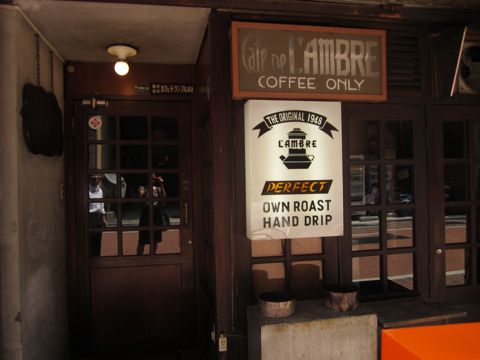
But a move to Tokyo presented not just the question of where in the world I should ride, but also where to find those coffee shops where you’ll want to linger, return, and order one more for the road. My coffee experience in Tokyo being a big, fat zero, I turned to Google and stumbled upon Café de l’Ambre. A coffee shop that only offers coffee? It sounded right up my alley.

null

Nestled in Ginza, it’s a small unassuming coffee shop conveniently located near my Dad’s office building. But it wasn’t the location that drew me; rather, it was the fact that Café de l’Ambre offers pourover coffee from aged beans [some from as far back as the 1970s]. A concept I’d never seen or head of before, and with a father willing to shell out over $8 for a cup of coffee, I sought out my first cup of vintage coffee.

null

null

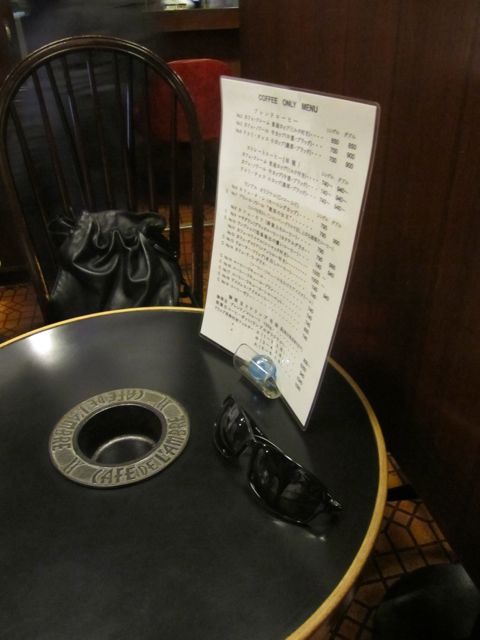
I unfortunately couldn’t get a seat at the bar, near the action, but was offered a seat at a table with built in ashtrays. I glanced at the menu I’d obsessed over via the Internet, wished for a second I had a cigarette [in a long cigarette holder...perhaps with a vintage dress], and ordered a medium pourover of straight/single-origin coffee. The coffee? A 1982 Kivu.

null

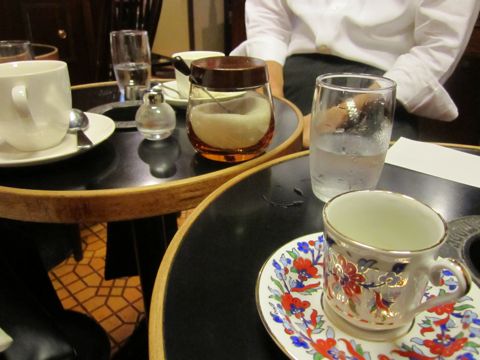
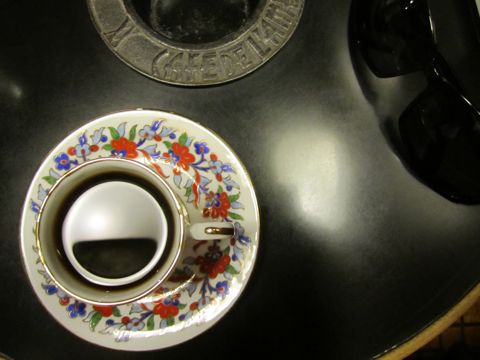
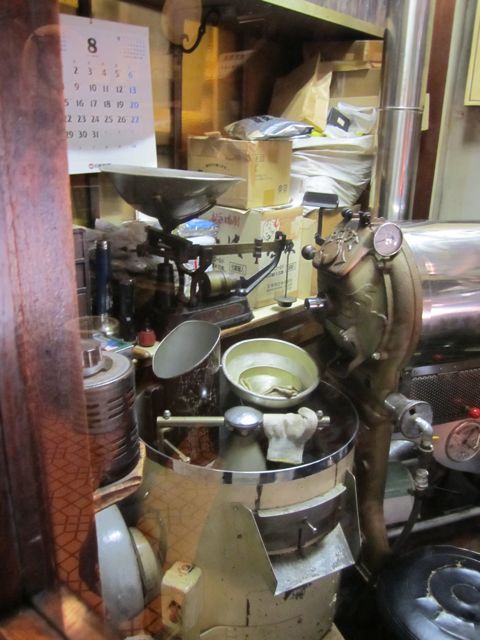
Presented in a cup the size of an espresso cup, a “medium” size got me about 50ml of liquid. Initially, there was a sense that I wasn’t getting what I/my Dad paid for; that this could be grossly overrated. But this cup packed a lot of flavor; moderately acidic with notes of berries, it’s a bright-tasting coffee that I wish I could afford on the regular. But intensely brewed, that small cup left me feeling like a wired squirrel and I almost bounced out of the shop [in heels, so this is saying a lot] without noticing the small roasting set-up out front.

null

null

My father grabbed me a card before we left, ready to take on Ginza and the oppressive summer heat. It’s no RSC, true, but Café de l’Ambre, I’ll be back.

deer flies, childbirth, and the century that wasn't

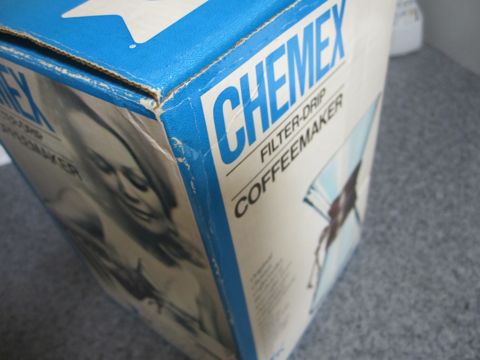
A few days ago, I walked into my aunt’s house to pick up a French press pot. Someone was vacuuming in the kitchen, but oddly, my aunt’s voice came from upstairs. She hurried down and squeezed past the mostly closed kitchen door behind which the vacuumer lurked. “Kaiko’s here, but don’t come out like that,” she said, before returning into view with both a Bodum French press pot and a Chemex.
“It’s, you know, that person,” she said to me and my mother. She was referring to, of course, her husband, my uncle. In response, my mother prepared her sympathetic face as my aunt sighed and shook her head. The game had begun.
null

Perhaps a uniquely Asian sport, and a particularly popular one among women over 50, my mother and my aunts play this game of spousal complaint often. The consistent nature of the complaints doesn’t seem to detract from the fun, only to add to the vigor of the match itself. No one person wins, unless, of course, someone’s spouse has done something particularly bad. This makes the sport not so much a sparring contest between the female members of my family, but more akin to competitive jabbing of an allegedly ineffective and often [though not always] absent target. And the jabbing is done with unforgiving enthusiasm; perhaps under the irrational hope that these complaints, voiced enough, might spark karma into abolishing incompetent spouses. Or, at the very least, enable them to vacuum more efficiently.
“At least you have someone willing to vacuum the house,” my mother said, throwing down the gauntlet. An invitation to include ungrateful children into the verbal exchange, my aunt gamely replied in kind: “but if Kaiko did it for you, at least she’d do it right.” Too familiar with this game, and unwilling to get sucked into choosing sides or presenting a modicum of reason into the debate, I clutched the Chemex and stared at my feet, making noncommittal guttural sounds when appropriate, waiting it out.
And though half a world away, those same actions reminded me of staring at something else – a sparklingly clean cassette that time – as I made the same somewhat noncommittal guttural sounds and waited that out, too. All 116 miles of it.
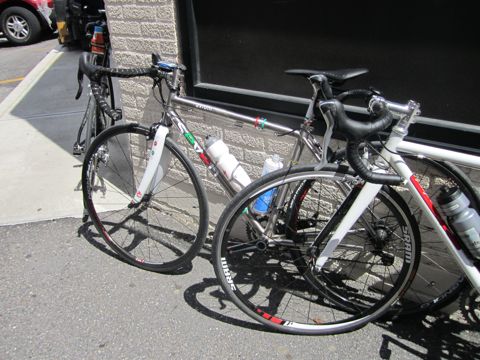
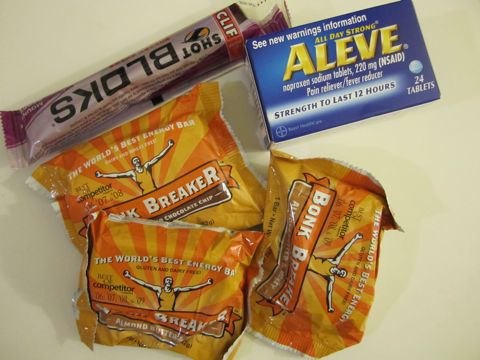
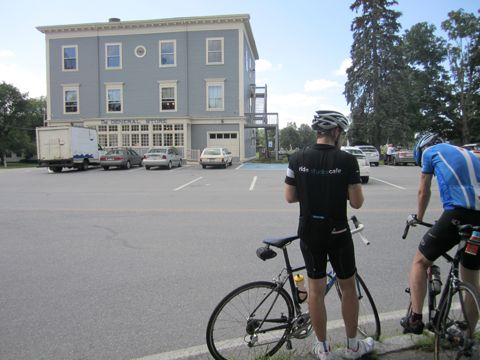
A ride that was presented in characteristically vague terms as “a century,” or “a century plus a little more,” it was my last chance to check off a triple digit ride before I left for Japan. Dave N., fully knowing this, laid a fail-proof trap, accompanying the description of the ride with phrases like “it’ll be fun!” and “if you can do 70 miles [my longest ride until two Wednesdays ago], you can do 100…and the rest is, you know, just a little bit more.” It’s true that I knew what I was getting into [to some extent], but there was a lot of voluntary blindness involved, too. When Geoff sent us the ride route, I briefly glanced at it before buying a few extra Bonk Breakers. Dave had said I would get through it. That I would “be fine.” I found faith in the fact that he had faith in me, and so we agreed to meet at Ride Studio Café on a Wednesday morning to ride to Mount Wachusett and back.
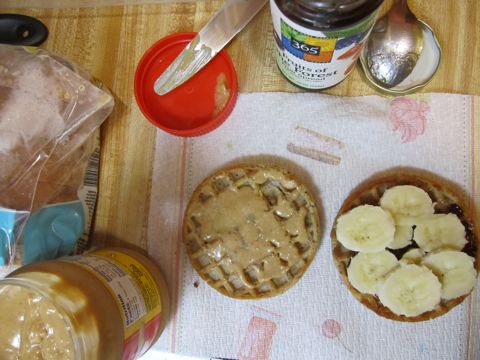
The equivalent of a charity ride, but one in which contributions came in the form of pain inflicted on the charity at hand, Dave N., Geoff, Jeremy, and I headed out on the ride on which, Dave N. clarified, I would “do fine,” but perhaps not “be fine.” The loop headed out towards Harvard before picking up the Charles River Wheelmen Climb to the Clouds century route, and included a few “gratuitous climbs” on the way back, courtesy of Geoff. Instructed to stay on Geoff’s wheel, I took an Aleve, stuffed my pockets full of food, and tried to hang on.
null

null

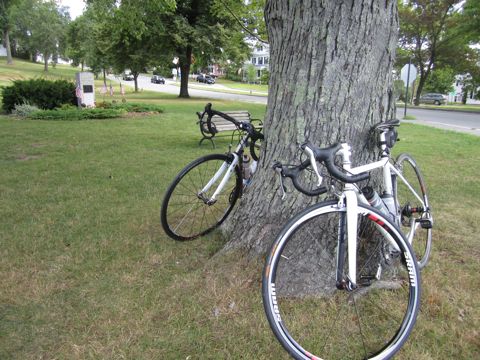
My naïve belief that Nagog Hill and Oak Hill were going to be the worst of it [excluding Mount Wachusett] was, simply put, stupid. “Didn’t you look at the ride route?,” Dave said, “you do know it said 8,000 feet of climbing, right?” “I don’t even know what that means,” I gasped, spinning with aching legs. Geoff mashed up the climbs in his big ring while Dave stayed behind my lagging wheel, both barely breaking a sweat. Slogging up to the visitor’s center of Mount Wachusett [we didn’t go all the way to the top, although Geoff tried] at the stunning speed of 6mph, I stared at dizzy disbelief at my sweaty forearms. I considered clipping out and stopping to say “I’m just going to lie down here and die,” but each time deferred that decision for just a little bit longer. Geoff asked if I was still alive. I made my noncommittal guttural sound.
null

null

null

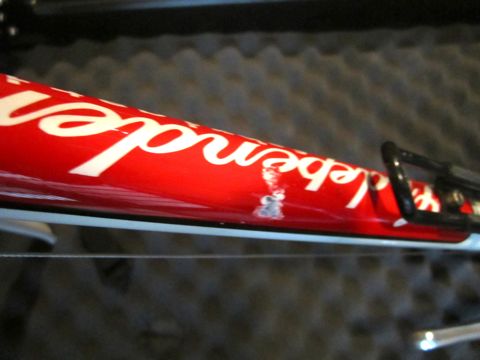
As long as the ride was, it can only accurately be described [as Dave put it] as comparable to childbirth: a painful process but one in which all is forgotten at the end. Well, almost all. Because while I generally did fine, some higher power determined that our ride required a little more epic. So when we hit the gravel-y path through Assabet River Park, a horde of deer files was released, congregating oh-so-conveniently on our asses.
null

If you are a cyclist with a paint job you might sacrifice your entire epidermis and a few bones for, and also lack most bike-handling skills, the combination of gravel and flies sinking their teeth into the flesh of your backside is close to the 9th circle of Hell. Geoff accelerated, trying to lose the cloud of flies drafting off of him, and I tried to follow without eating sand, aware that should I do so, death by deer flies was certain. They stayed on us the entire way through the park, though, tattoo-ing me with unsightly red slotches all over my butt. A couple marks for the road back to Tokyo.
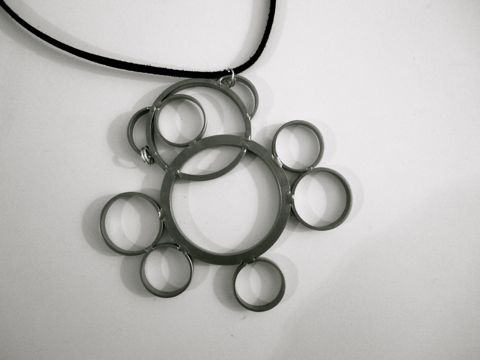
But I also came back with 116 miles with 7000 feet of climbing in 7.5 hours of riding under my belt, too. A few hours post-century-plus, at a celebratory get-together organized by Dave, I got something else; something as awesome as knowing I could throw down 116 miles: a necklace designed by Rob and crafted out of Seven titanium. A reminder of good friends, good rides, and accomplishments.
null

Hopefully with more to come…